
Welcome to the second session of ScriptRemix!
Part 1: Character Types
In this first video we’ll be discussing character types, what functions they perform in dramatic writing, and how you can play with them and your audience’s expectations.
EXERCISE: Casting Call (15 minutes)
Choose between 3 and 5 central characters you’re interested in writing about, perhaps a hero (or heroes), a villain, and a sidekick and go-between. Describe some of their character traits. Try to isolate what type (or types) of characters they are or if they are a mixture of types. Discuss how they feel about the other characters. Consider what sort of history they might have.
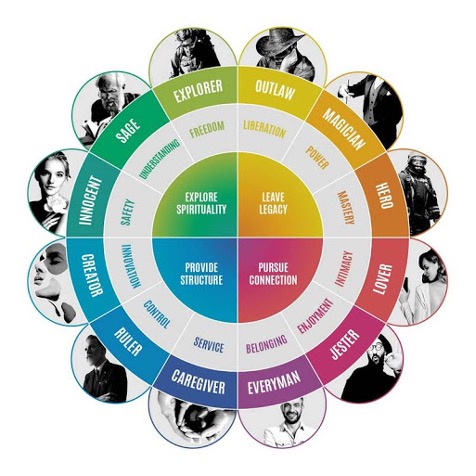
Try casting your script. It can often help to visualize an actor or a celebrity (or even people from your life) when writing characters.
CHARACTER TIP
Psychologist Carl Jung famously isolated 12 archetypes which described characters that recurred in storytelling through the ages. Can you see any of these in your characters?
Here’s a link to a discussion of Jungian archetypes in recent Hollywood films.
Part 2: Character and Reveal of Information
Now that you have learned all about character archetypes, we are going to talk about the importance of how you decide to reveal information and what this means about your character’s ongoing development. Is your piece a mystery? Is your character an extrovert? An introvert? What do other characters say about the main character that unveils more of who they are and how they will act as the story unfolds. A good script has pace and momentum, which is always connected to the techniques and ways in which you reveal key information about the character and their actions.
resources
- Fleabag – Breaking the fourth wall
- Stranger Than Fiction – Narration and voiceover
- Mad Men – Production design for character development
- National Theatre – Movement and gesture in character development
- Mr. Robot – Unreliable narrators
- PBS – Unreliable narrators (more literature-based)
- 10 Characters in Film Who Lied to You
EXERCISE: Monologue (15 minutes)
Consider which character will be your protagonist. You could choose any character for this. For instance, you might have chosen Alice in Wonderland but you want to centre the Mad Hatter as the main character. Put a timer on and write a monologue from the first-person perspective (using “I”) of the character you have chosen. In the monologue, have the character speak about how others perceive them versus how they perceive themselves. Try and have them discover something new about themselves in the monologue. For example: everyone sees the Mad Hatter as removed from reality, when maybe he is the most in touch with it. Or everyone sees Dracula as a villain, when he thinks he is doing the world a favour.
Think about how this character reveals this information about themselves. Do they hide a lot? Do they tell you everything? Are they defensive? Do they know an audience is there or are they talking to themselves when they think no one is watching (what is called a soliloquy)?
Your piece doesn’t need to involve first-person monologues. Perhaps your protagonist never speaks, and information is revealed about them through others, through action only, or through a voiceover narration like Stranger Than Fiction. This exercise is meant to get you acquainted with the perspective and inner thoughts of your central character to help you to understand them better as you continue to write.
Part 3: Character Motivation
In this final video on character, we’ll be discussing motivation – your character’s needs and desires. These are the building blocks of story and plot – the reasons your characters do what they do – and why you and your audience should care about them.
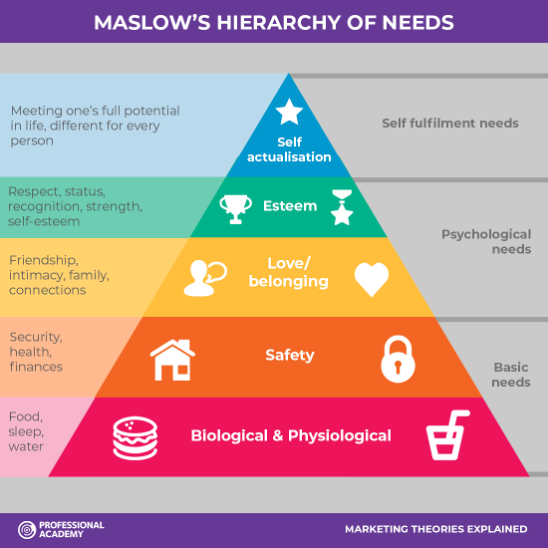
To understand your character’s needs, it can be helpful to refer to Maslow’s Pyramid.
EXERCISE: Character Goals (15 minutes)
“You can’t always get what you want.
But, if you try some time, you get what you need.”
Jagger/Richards
Pick one (or, if you have time, two) of your characters and describe what they are striving for in your story. You could use Maslow’s pyramid as a guide if you want. What would happen if they got these things? What would happen – and how would they feel – if they didn’t? What do you think they really need? What would happen if they got something unexpected?
Extra Viewing
Here are trailers for some of the movies discussed in the video:
- Gus Van Sant’s Milk (2008), for which Sean Penn won a Best Actor Oscar.
- Richard Attenborough’s Gandhi (1982), which won several Oscars including Best Picture, Best Director for Attenborough, and Best Actor for Ben Kingsley.
- Robert Mulligan’s To Kill a Mockingbird (1962), which won Gregory Peck an Oscar.
Takeaway from all this is that if you want to win an Oscar, writing about social justice issues can give you a leg up.
Wrap Up
Now that you have chosen which character(s) will be in your adaptation script and explored their motivations, objectives, and how they are revealed to the audience, we are going to take these characters and put them into a universe. The next session is all about setting and world-building!
 newshoots.ca